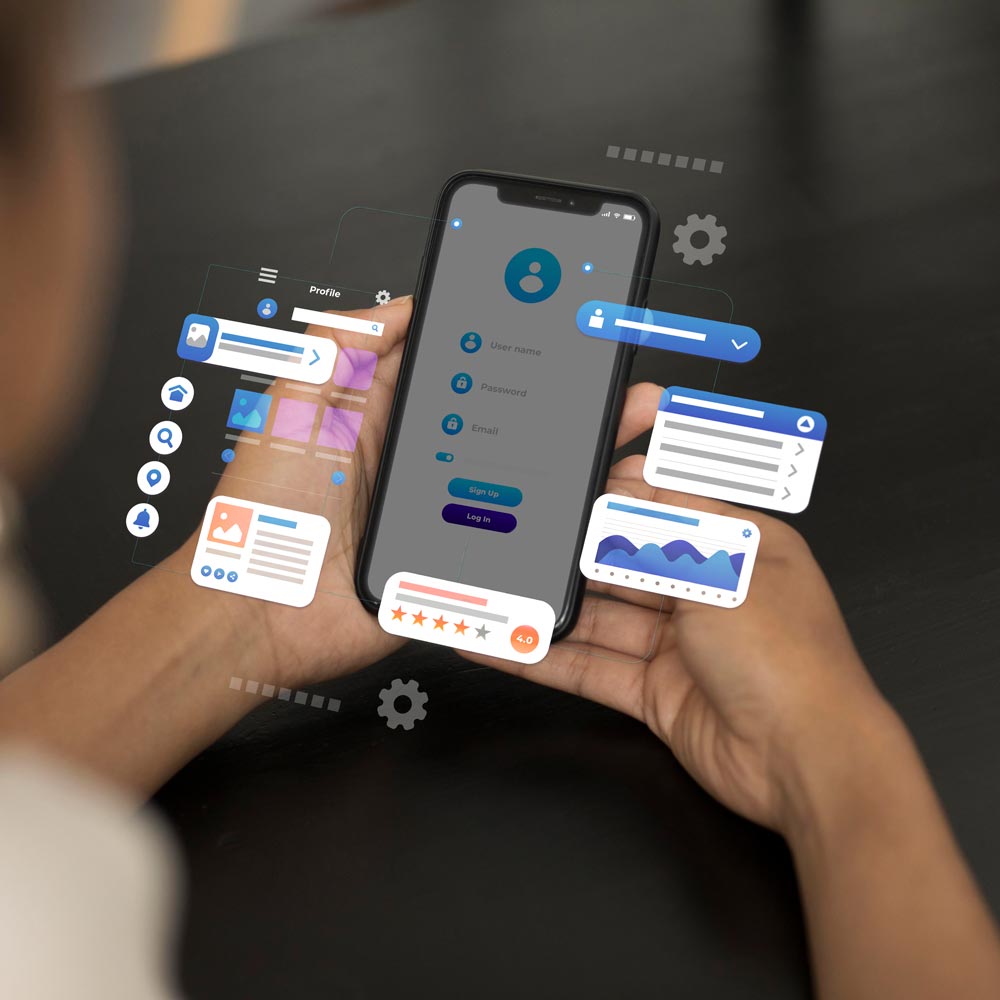
Mobile-first marketing. It sounds like another trendy phrase cooked up in a boardroom somewhere between an over-sweet latte and a PowerPoint nobody wanted to see. But the truth is simple: the world has become a giant scrolling machine. Every single day, people wander around New Orleans tapping screens, bumping into tourists, checking menus, answering messages, and occasionally remembering to look up long enough to avoid a streetcar. Phones are the new billboards, newspapers, and television sets all rolled into one.
That means mobile-first marketing isn’t a trend anymore. It’s the main dish. It’s the gumbo pot in the middle of the table. Everything else is a side item.
The shift began quietly years ago, and now it has taken over the digital universe. Most people live on their phones. Not metaphorically—some folks practically treat them like emotional support animals. The phone wakes up with them, travels through the day like a loyal companion, and ends the night right there on the pillow. Desktop computers have become what landlines used to be: things someone’s uncle still uses but nobody else touches unless absolutely necessary.
Mobile-first marketing recognizes this behavior and adapts to it. Content has to load fast, look good, and make sense on a tiny screen held by someone walking through the French Quarter balancing a daiquiri. That’s a demanding environment. If content takes too long to show up, people tap away faster than someone running from a meter maid. If a website layout shifts around like it just spotted a cockroach, attention disappears instantly.
Search engines also treat mobile performance like gospel now. They study how well digital content performs on phones, and that data influences visibility. Clean layout, readable text, quick loading times—those details act like a digital handshake that says the content is ready for action. If a mobile page behaves badly, the search engines gently scoot it to the back of the line like a troublemaker in homeroom.
Social platforms take this even further. Vertical videos, bite-sized clips, swipe-friendly graphics, simple messages—that’s the winning formula. People spend the majority of scrolling time on phones, not laptops. If something doesn’t shine on a small screen, it won’t shine anywhere. A desktop-optimized masterpiece with horizontal formatting might look beautiful on a 27-inch monitor, but the average person is seeing it through a cracked iPhone held at a questionable angle with 14% battery left.
Mobile-first strategies also influence small business visibility in unexpected ways. Local search, map listings, and location-based discovery tools rely heavily on mobile behavior signals. Imagine someone sitting in a parking lot searching for a service, a shop, a place to eat, or something to solve a problem right now. That’s almost always a mobile search. Those results favor businesses whose digital presence loads quickly, clearly, and without confusing clutter.
People also make decisions differently on mobile devices. Attention spans shorten. Scrolling becomes rapid. Choices get made in seconds. A clean, simple message performs better than paragraphs of text. A strong visual communicates faster than a clever headline. Buttons need to be tappable by people with hands of all sizes—something often forgotten by designers who build everything on giant monitors and don’t test it in the real world.
Mobile commerce has made this shift even more pronounced. Purchases happen on phones at rates that would have sounded impossible 10 years ago. Mobile checkout has to be smooth, predictable, and quick. Slow-loading carts or complicated forms become exit ramps that send customers somewhere else. Simplicity wins the moment.
Another aspect of mobile-first strategy is the need for consistency. People jump between apps constantly. A message might appear on social media, then in a text link, then in a search result, then on a landing page. If those touchpoints feel disconnected, attention drifts. If everything feels unified and predictable, interest stays intact. Mobile experiences create that consistency because they force clean design, minimal clutter, and easy storytelling.
Behavioral patterns are the true driving force behind all this. People respond differently when holding a device. Taps replace clicks. Scrolls replace page navigation. Quick glances replace long reading sessions. Phones are used in motion, in noise, in unpredictable moments. Marketing has to respect that or risk being ignored completely.
As the owner of Jambalaya Marketing, these patterns show up constantly. Businesses that embrace mobile-first strategies get better engagement because the message matches how modern humans actually behave. It’s not about fancy terms or tech trends. It’s about understanding that the phone is now the primary stage where attention lives. Everything else is secondary.
A mobile-first mindset doesn’t complicate marketing—it simplifies it. It forces clarity, precision, and intentionality. It trims away the fluff and leaves only the essentials. And in a world overflowing with distractions, essentials are what stand out.
Mobile-first thinking unlocks the ability to meet people where they already are: standing in line at a coffee shop, sitting in traffic on I-10, waiting for an order at Café Du Monde, or lying in bed pretending the alarm wasn’t ignored three times already. Digital life happens on phones, and marketing has to follow that truth.
The businesses that succeed in 2025 will be the ones that understand this shift deeply and adapt to it completely. Not because a trendsetter said so, but because the real world made the decision for them. The audience has already moved to mobile. The question is whether the message plans to meet them there.